Hypertrophic pyloric stenosis on ultrasound: the measurements, the pitfalls and the report
How to examine the pylorus in the vomiting infant, which measurements confirm hypertrophic stenosis, how to differentiate it from pylorospasm and what the report needs to include for the pediatric surgeon to decide.
 LaudárioUltrasound reports in practice
An infant with projectile, nonbilious vomiting in the first weeks of life is the classic presentation of hypertrophic pyloric stenosis. Ultrasound is the study of choice: it confirms or rules out the diagnosis in a few minutes, without radiation, and the result goes straight into the surgical decision. For this reason, the measurements must be taken in the right place and reported clearly.
Who and when
The disease typically appears between the 2nd and 12th week of life, with a peak between the 3rd and 6th, and is more frequent in boys. Bilious vomiting is not typical and should raise other possibilities, such as malrotation with volvulus, which is an emergency.
Technique
- High-frequency linear transducer, infant supine or in the right lateral decubitus position.
- The pylorus lies on the right, near the gallbladder and medial to the gastric antrum.
- Offering fluid (glucose solution or milk) distends the antrum and allows you to see whether the contents pass through the channel.
- A very full stomach can displace the pylorus posteriorly; in this case, the right lateral decubitus position helps.
The measurements
- Pyloric muscle thickness, measured in the longitudinal or transverse view, only the hypoechoic muscular layer. Values from about 3 mm are considered abnormal.
- Pyloric channel length, in the longitudinal view. Values from about 15 mm are considered abnormal.
- The transverse diameter of the pylorus is a complementary measurement.
More than an isolated number, the diagnosis rests on the whole picture: thick muscle, elongated channel and absence of passage of gastric contents during observation, often with vigorous gastric peristalsis.
Pylorospasm: the main pitfall
In pylorospasm, the pylorus may look thick and elongated at one moment and open at another. Borderline measurements that vary during the study, with intermittent passage of contents, favor spasm. In this situation, the report should describe the variation and, if symptoms persist, suggest reassessment rather than closing the diagnosis.
What the report should include
- Pyloric muscle thickness and channel length, with the measurements.
- Whether contents passed through the channel during the study.
- Degree of gastric distension and peristalsis.
- Other findings, such as free fluid or distended bowel loops.
- A clear conclusion: findings consistent with hypertrophic pyloric stenosis, or pylorus without signs of stenosis, or borderline findings with a recommendation for reassessment.
Common errors
- Measuring the mucosa together with the muscle.
- Measuring in an oblique view, which overestimates thickness.
- Closing the diagnosis with borderline measurements and a channel that opens.
- Not reporting whether the contents passed.
- Failing to record bilious vomiting in the indication, when present.
See also our article on ultrasound for appendicitis.
How Laudário helps
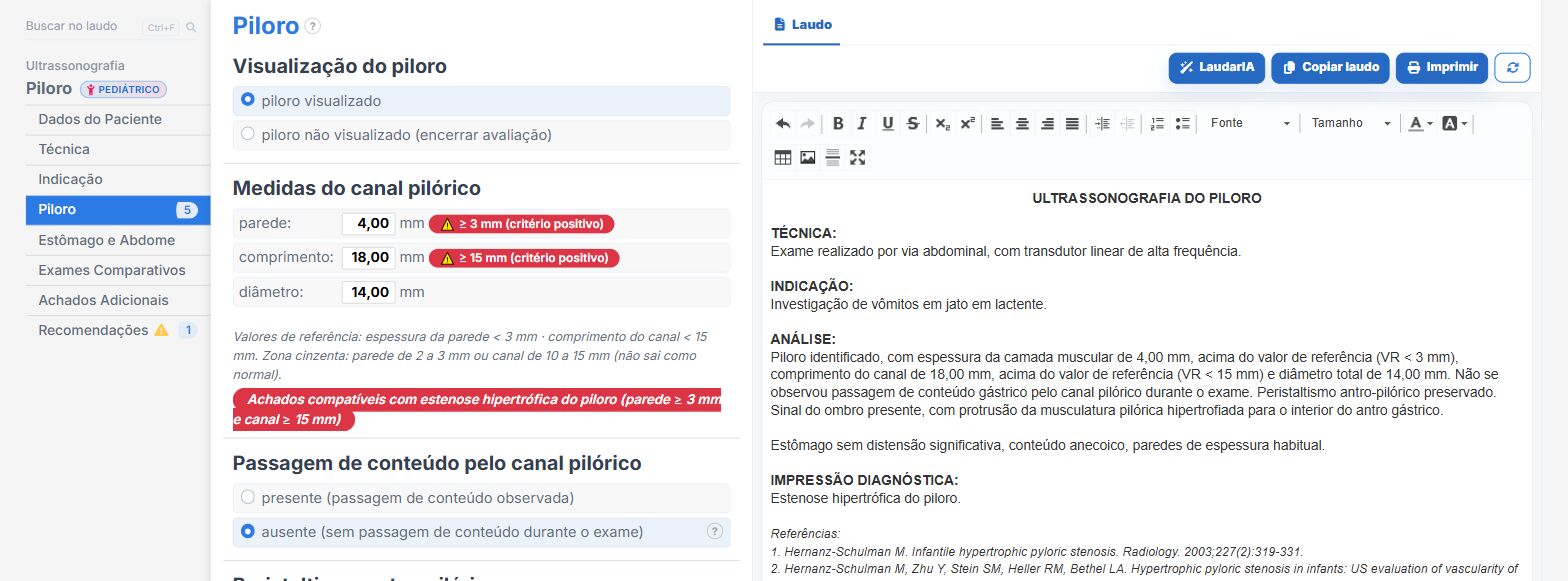
In the pediatric pylorus template of Laudário:
- Muscle thickness and channel length in their own fields.
- Passage of contents and gastric distension as options.
- Conclusion built from the findings, without retyping.
Try it free for 15 days, no credit card required.
The ultrasound reporting platform built by sonologists. We write about reports, classifications and standardization from the real routine of the practice. Who writes and how.
Educational content for healthcare professionals. It does not replace clinical judgment or the guidelines adopted by your service. Editorial policy.