Rectus diastasis on ultrasound: where to measure the inter-rectus distance and how to report it
The measurement levels of the linea alba, the study at rest and during contraction, the most cited reference values and the midline hernias that must be sought in the same study.
 LaudárioUltrasound reports in practice
Rectus diastasis is the separation of the rectus abdominis muscles with widening of the linea alba, very common after pregnancy. Ultrasound is the study of choice to measure the distance between the recti and look for associated hernias, but the report is only useful if it states where the measurement was taken and under what condition.
Where to measure
The inter-rectus distance is measured between the medial borders of the two muscles, with the transducer in the transverse plane, at standardized points along the linea alba. The most commonly used are:
- At the umbilicus.
- About 3 cm above the umbilicus.
- About 2 cm below the umbilicus.
Recording all three points allows comparison between studies and tracking of the effect of physical therapy.
Rest and contraction
The study is done supine, at rest and during abdominal contraction, such as raising the head and shoulders. On contraction, the distance tends to decrease; failure of the recti to approximate, or bulging of the linea alba, is useful information for the surgeon and the physical therapist.
Reference values
There is no universal cutoff. In practice, distances above about 2 cm are usually considered diastasis. Studies in nulliparous women describe linea alba widths of up to about 15 mm at the xiphoid level, 22 mm 3 cm above the umbilicus and 16 mm 2 cm below it as normal. The report should include the measured values and the reference adopted, and not just "diastasis present."
Looking for hernias
Diastasis is not a hernia: the linea alba is widened but intact. In the same study, however, umbilical and epigastric hernias should be sought, since they change the surgical indication. Describe the neck of the defect, the contents and whether it is reducible, including with a Valsalva maneuver.
Common errors
- A single measurement, without the level at which it was taken.
- Measuring only at rest.
- Calling the diastasis a hernia, or failing to look for midline hernias.
- Omitting the thickness and appearance of the subcutaneous tissue when abdominoplasty is being considered.
See also our article on abdominal wall hernias.
How Laudário helps
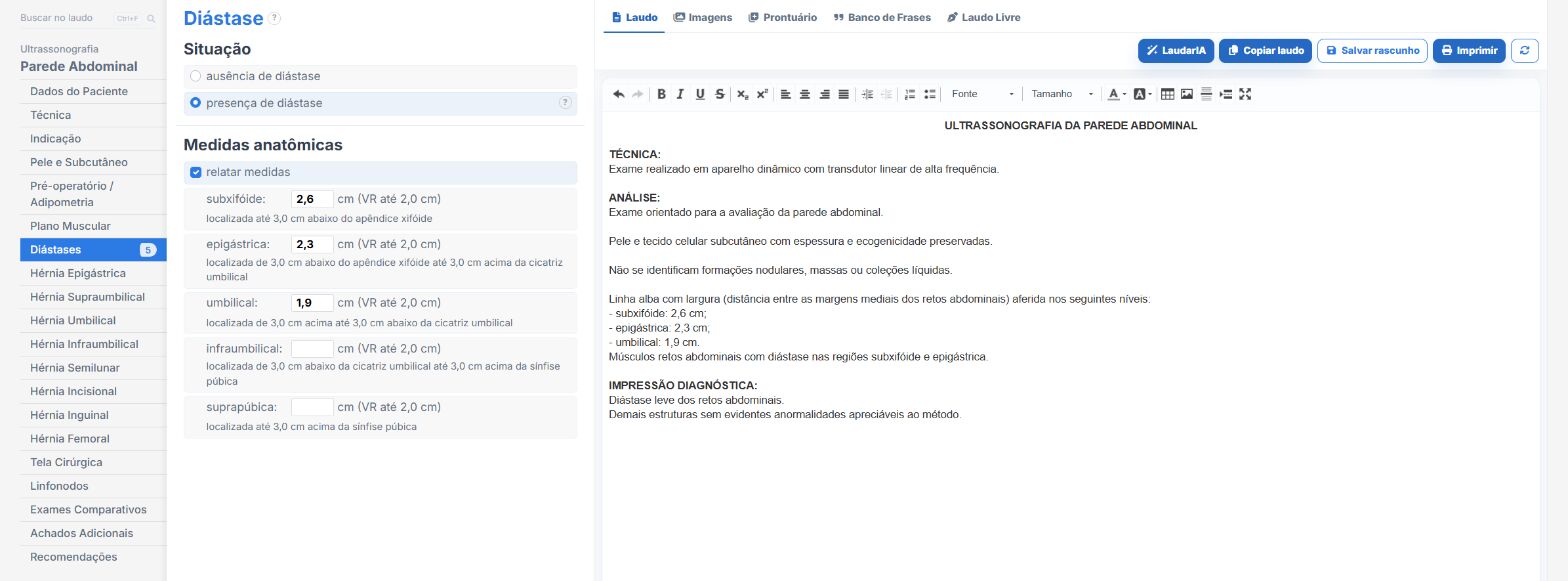
In the abdominal wall and soft tissue templates of Laudário:
- Inter-rectus distance at the three levels, at rest and during contraction.
- Midline hernias with neck, contents and reducibility.
- Recommendations in their own tab.
Try it free for 15 days, with no credit card.
The ultrasound reporting platform built by sonologists. We write about reports, classifications and standardization from the real routine of the practice. Who writes and how.
Educational content for healthcare professionals. It does not replace clinical judgment or the guidelines adopted by your service. Editorial policy.